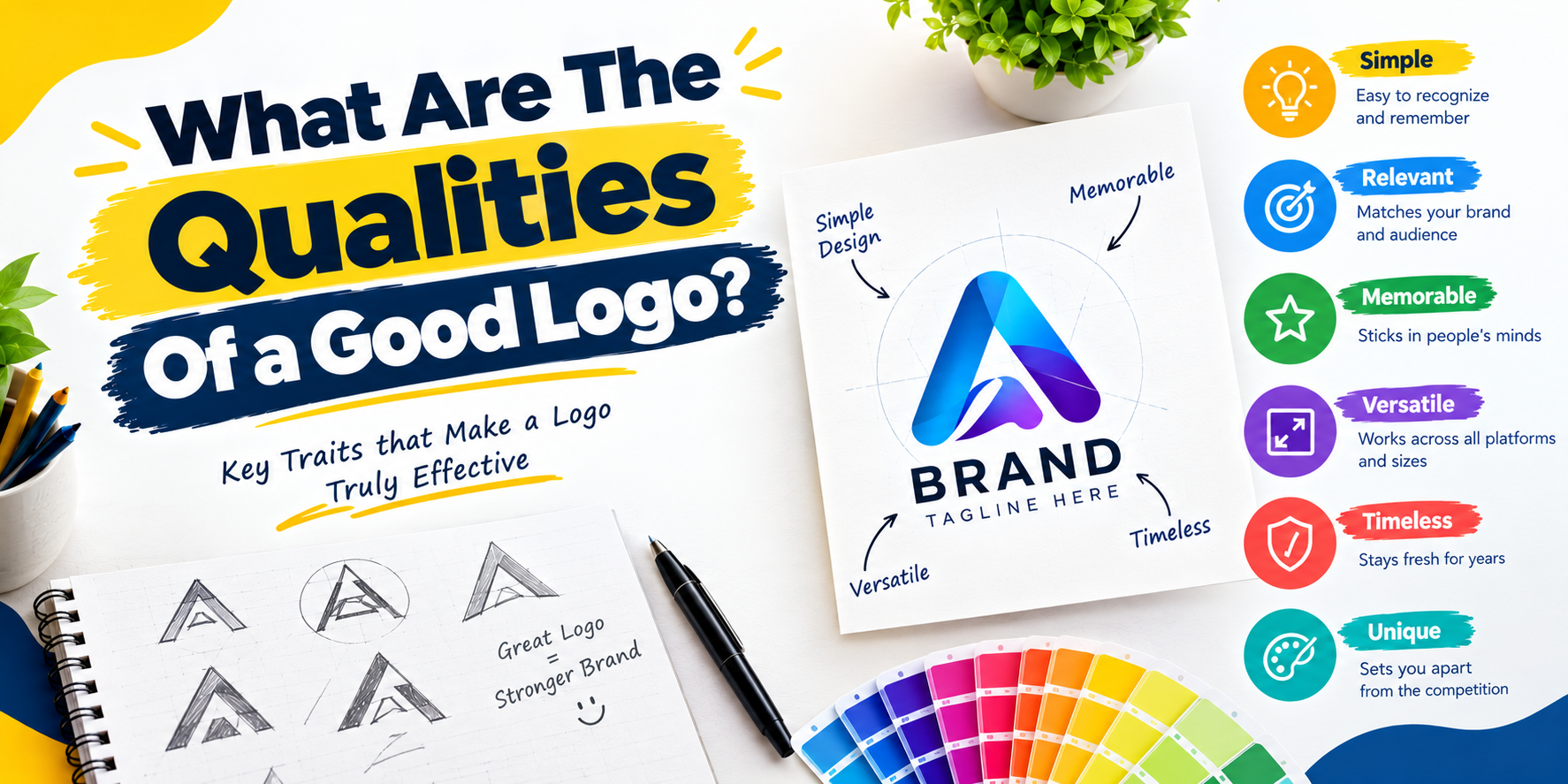
A logo is one of the most important visual elements of a brand. It helps people recognize a business and remember it after they see it. A logo may appear on a website, a social networking site, a business card, a product, a package, a signboard, or an advertisement. A business should have a design that looks professional and stands out because of its uniqueness.

A good logo, however, is not just a beautiful picture. It must reflect the brand, convey the right message, and work in various scenarios. A great logo needs to be easily identifiable, but not extremely complex. Knowing the key characteristics of a good logo can help business owners make better design decisions.
An excellent Logo is Simple
One crucial feature of a good logo is simplicity. The easier a design is to understand, the easier it is to remember. If a logo has too many colors, shapes, effects, and details, people may not be able to identify it.
A clean design focuses on the brand’s key concept. This does not mean the logo has to look dull. It means each component must be purposeful and work naturally in harmony.
It Is Easy to Remember
An effective logo must stay in people’s minds. A hundred and one logos might be displayed on a customer’s doorstep, so a brand needs a design that gets noticed.
A catchy logo can be a distinctive shape, symbol, color pattern, or type style. It doesn’t need to be complex to become familiar. An original, well-defined concept helps people remember the logo better.
It is a Symbol of the Brand
A logo must suit the business and its personality. Its design must give people an idea of what sort of brand they are dealing with.
For example, a children’s apparel company can use vibrant colors and friendly figures. A financial organization can opt for a more reliable, professional style. A fitness brand can use strong shapes and active design elements. The logo must relate to the business rather than be too strange.
It employs appropriate Colors.
Color can powerfully influence people and their attitude toward a brand. Colors may produce various sentiments and associations. Blue can connote trust, while green can connect to nature, health, or growth. Red can convey a bold, energetic feeling. Companies that need help creating a coherent visual identity can hire a professional logo designer in Pakistan to develop a design that aligns with marketing requirements and the business’s brand.
A decent logo doesn’t need many colors. One or two well-chosen colors can sometimes create a more effective visual identity. The colors must also be harmonious and clear when transferred to alternative media.
It Has Clear Typography
If a logo contains words or letters, the text should be readable. An attractive font can be appealing, but it’s useless if customers can’t interpret the business name.
The font should also reflect the brand’s personality. A modern business can use a clean font, while a more creative business can use a more expressive one. The typography should add personality without complicating the logo.
It Works on Different Sizes
The logo can fit on a huge banner or a small cell phone screen. It can also be featured at the end of a business card, as a website icon, on a product label, or on a social media profile.
A good logo is one that, when enlarged or reduced, does not become obscure. Critical shapes and text must not be lost when the design is shrunk. This is why professional designers usually create logos in formats that can be resized without losing quality.
It works in black and white.e
A powerful logo must not entirely rely on color. See what the design would look like in black and white. If the main form and details remain clear, the logo is well structured.
This is an effective test because businesses may need to print their logos in black and white. A logo that works in both color and black and white is more adaptable.
It Is Original
Originality assists a business to develop its own identity. A logo’s design must not be too close to another company’s. Although the general arrangement of shapes, colors, fonts, and ideas may be the same, others use general symbols in specific industries.
An original logo helps a brand stand out. Businesses should also check whether similar trademarks already exist before using a final design, especially if they plan to use the logo on a large scale.
It is Compatible with other Platforms
Modern brands apply contemporary logos across numerous media. The logo can be displayed on websites, social media, email, packaging, advertisements, uniforms, and printed materials.
The design should look professional across these platforms. It must be in appropriate file formats and work on both dark and light backgrounds (where necessary).
It shares the appropriate message
The logo should create a strong first impression. It need not tell the whole story of a company, but it should reinforce the brand’s message.
For example, a luxury business might require a finely tuned, sophisticated look. A clean, modern design might suit a technology company. A family-oriented business can adopt a cozy and friendly style.
It Is Timeless
Design trends change over time. A logo that follows every trend will become old-fashioned in a few years. A good logo is typically classic, and this character can help it remain relevant as the business expands.
This does not mean a brand cannot change its logo. Many successful corporations change their design as their businesses evolve. Nevertheless, the overall identity must not be lost.
Conclusion
The ideal logo must be easy to reproduce, catchy, novel, and relate to the brand. It must use appropriate colors and fonts and remain clear at various sizes. It must also work across websites, social media, and printed materials, among others.
To design a good logo, you need to do more than select a good image. The design needs to convey the right message and reach the intended audience. With these qualities in mind, businesses can develop a strong visual identity that looks professional and remains useful as the brand expands.