Short-form video rules attention right now. Creators who post consistently on TikTok and YouTube Shorts grow faster than those who wait for perfect ideas. The hard part is never the camera or the edit. It is coming up with the next video when your mind goes blank.

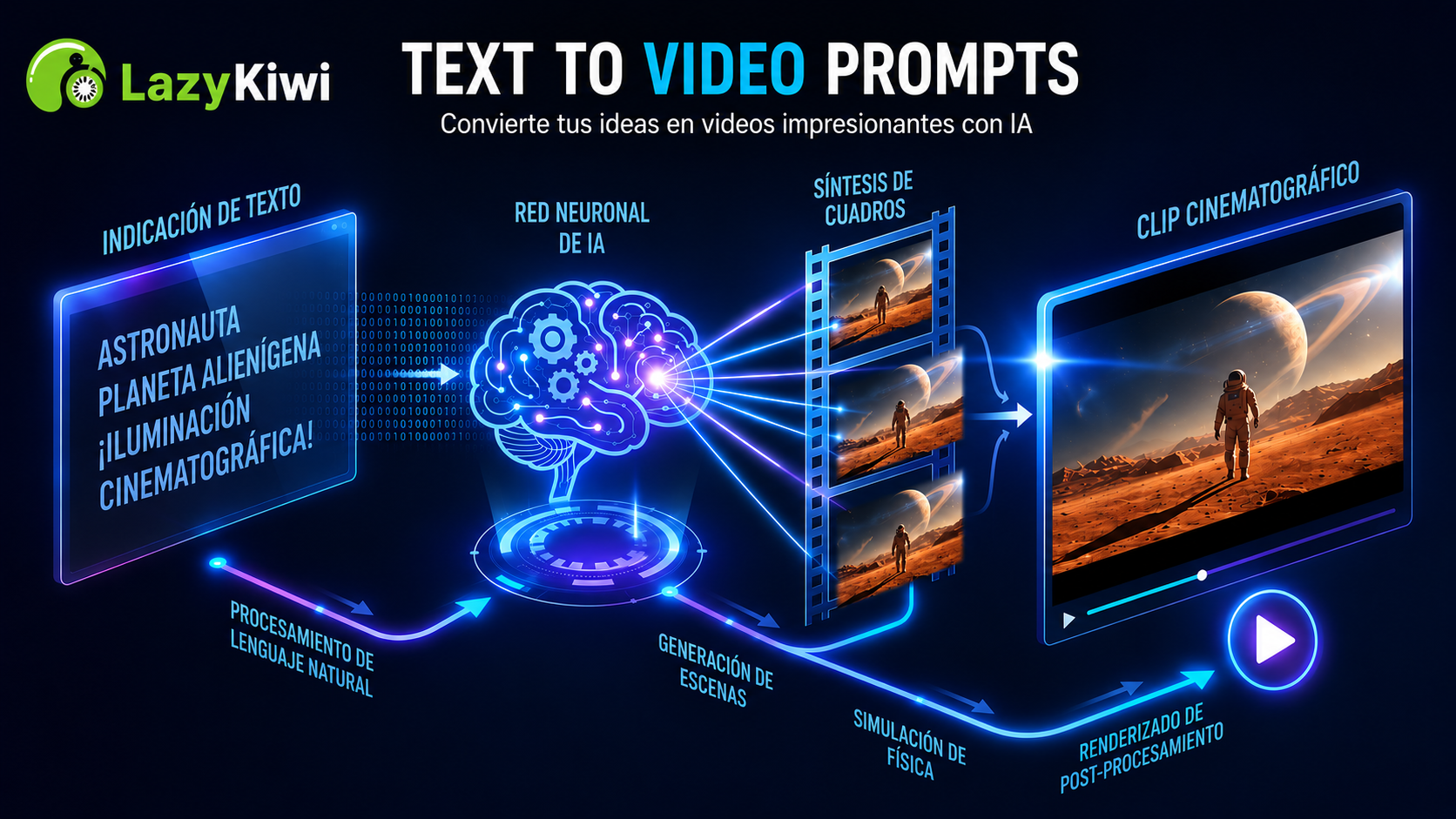
That is where smart text to video prompts change everything. You type a clear description, an AI tool turns it into a clip, and you post. No expensive gear. Just usable vertical video that fits the platforms people actually watch.
This guide covers practical prompt writing, ready-to-use TikTok concepts, and YouTube Shorts formats that work in 2026. You will leave with ideas you can film or generate today.
Why Prompt Quality Matters More Than Fancy Tools
Most people open an AI video tool, type a vague sentence, and get blurry or random results. Weak prompts are.
A strong prompt answers four simple questions:
- Who or what is the main subject?
- What single action happens?
- Where is the scene and how is it lit?
- What camera move and style should the viewer feel?
Keep one subject and one clear action. Short clips have no room for complicated plots. Vertical 9:16 format works best for both TikTok and YouTube Shorts. Add lighting words like “soft golden hour,” “neon night,” or “bright studio” so the model knows the mood.
Here is a basic structure that works across most current tools:
- [Shot type] of [subject] [doing one clear action] in [setting].
- Camera [simple movement].
- [Lighting and style].
- Vertical 9:16, [length] seconds.
Example for a product clip:
Close-up of a matte black water bottle on wet stone. Water droplets slide down the surface as the bottle slowly rotates. Soft studio light with sharp reflections. Luxury product style. Vertical 9:16, 6 seconds.
That single prompt gives you clean footage you can drop straight into a Short or TikTok. Test small changes. Swap “soft studio light” for “harsh neon,” and you get a completely different feel without rewriting everything.
Turning Prompts into Scroll-Stopping Content
Once you have the clip, the real work is the first two seconds. On both platforms, the algorithm watches how fast people stop scrolling. Open with motion, a bold text statement, or a surprising visual. Never start with a slow intro.
Add captions. Many people watch with sound off. Keep text large and centered so it stays readable on a phone. End with a clear next step: a question, a call to save, or a simple “follow for more.”
Batch your prompts. Write ten variations in one sitting. Generate them overnight. Edit the best three the next morning. This rhythm keeps your posting schedule steady without daily creative pressure.
TikTok Video Ideas That Still Work When Trends Fade
Trends come and go. Formats last. These ideas keep performing because they solve a viewer problem or trigger an emotion fast.
Start with “things I wish I knew.” Share one hard-won lesson from your niche in under 30 seconds. Open with the mistake most beginners make. End with the simple fix. High save rates push these further in the feed.
Try a 15-second skill tutorial. Teach one tiny action only. Show the before, the single step, and the after. No talking if you prefer faceless content. Hands and screen recordings work just as well.
Myth versus fact splits cleanly on screen. Put the common wrong idea on the left. Reveal the truth on the right. This format drives comments because people love correcting or agreeing.
Day-in-the-life micro clips still land when they feel honest. Film three quick moments from a real day. Add a voiceover that names the feelings most people share. Skip the polished highlight reel. Raw wins.
POV scenarios create instant connection. “POV: you finally finished the project you started three months ago.” Keep the visual simple and the text on screen. Viewers finish the story in their own head and often share it.
If you sell something, show one real use case. Film the product solving a small frustration. No hard sell. Just the before-and-after in under 20 seconds. People buy what they understand quickly.
These formats give you a bank of TikTok video ideas you can repeat with new topics every week. Change the niche details and the video feels fresh again.
YouTube Shorts Ideas Built for Longer Reach
YouTube Shorts reward clear information and strong retention. Viewers often search later, so titles and spoken words matter more than pure entertainment.
Lead with the result. Show the finished dish, the cleaned desk, or the working code in the first frame. Then reveal the three steps that got there. People stay because they already see the payoff.
Bust one common piece of bad advice. Open with “Stop doing this if you want X.” Explain why it fails in one sentence. Give the better move. Shorts like this collect views for months through search.
Pull peak moments from longer videos you already published. Take the single strongest reaction, the clearest tip, or the most surprising line. Open cold at that moment. Add a text overlay that sets context. Link the full video in the description.
Ask a specific question that matches how people search. “What is the fastest way to fix [problem]?” Answer it in 20 seconds with one clear method. Use the exact phrasing people type into YouTube.
Before-and-after transformations still perform when the change is obvious. Show the messy version first. Cut hard to the improved version. Keep the transition under one second. Add a quiet text line that names the change.
Faceless options work well on Shorts. Screen recordings, B-roll with voiceover, or text on abstract motion keep the focus on value. Many channels grow without ever showing a face.
Use these YouTube Shorts ideas as templates. Film or generate five versions of the same format in one session. Post the strongest. Study the retention graph. Make more of what holds attention past the 10-second mark.
Gaps Most Guides Miss
Many articles list ideas and stop. They rarely explain how to adapt a prompt when the first generation fails. If the motion looks robotic, add “natural smooth movement” and “subtle camera float.” If colors feel flat, specify “rich contrast” or “warm film grade.”
Another missing piece is cross-platform reuse. The same generated clip can become a TikTok with trending audio and a Short with a different text hook. One generation serves two platforms with small edits.
Consistency beats perfection. Post three times a week using the same two or three formats. The algorithm learns what your audience expects. New viewers stay longer because the style feels familiar.
Track what actually works for you. After ten videos, look at average view duration and saves. Double down on the formats that score highest. Ignore the rest.
Practical Tips You Can Use Today
Write prompts in a simple notes app. Keep a running list of subjects, actions, and lighting words that fit your niche. Mix and match when you need a new clip.
Generate more than you need. Most tools let you create variations. Pick the cleanest three and archive the rest for later.
Always add captions even if the AI includes audio. Platform algorithms favor accessibility.
Post at times when your audience is active, but do not obsess over the clock. Consistency over months matters more than the perfect hour.
Review your own old videos once a month. The clips that still get views months later are your evergreen formats. Make more of those.
Conclusion
Strong text-to-video prompts remove the biggest barrier most creators face: the blank page. Clear prompts produce usable clips. Proven formats turn those clips into videos people finish and share—TikTok rewards emotion and speed. YouTube Shorts rewards clear value and search-friendly language.
You now have the prompt structure, repeatable ideas for both platforms, and the practical habits that keep content flowing. Start with one prompt today. Generate the clip. Add a sharp opening line. Post it. Then do it again tomorrow. The creators who treat short videos like a craft instead of a lottery are the ones who keep growing.
FAQs
What makes a good text-to-video prompt?
A good prompt names one subject, one clear action, the setting, camera movement, lighting, and style. Keep it specific and short. Vague prompts produce random results.
How long should TikTok videos and YouTube Shorts be?
Aim for 15 to 30 seconds. Completion rate matters more than length. A 20-second video that people finish outperforms a 50-second video that loses viewers halfway.
Can I use the same video on both platforms?
Yes. Export vertical. Change the text overlay and audio to match each platform’s style. One generated clip can serve both with light edits.
Do I need to show my face?
No. Hands, screen recordings, product shots, and voiceover B-roll all perform well. Many successful accounts stay completely faceless.
How often should I post?
Three to five times a week is sustainable for most people. Focus on consistency over volume. The algorithm rewards regular activity more than random bursts.