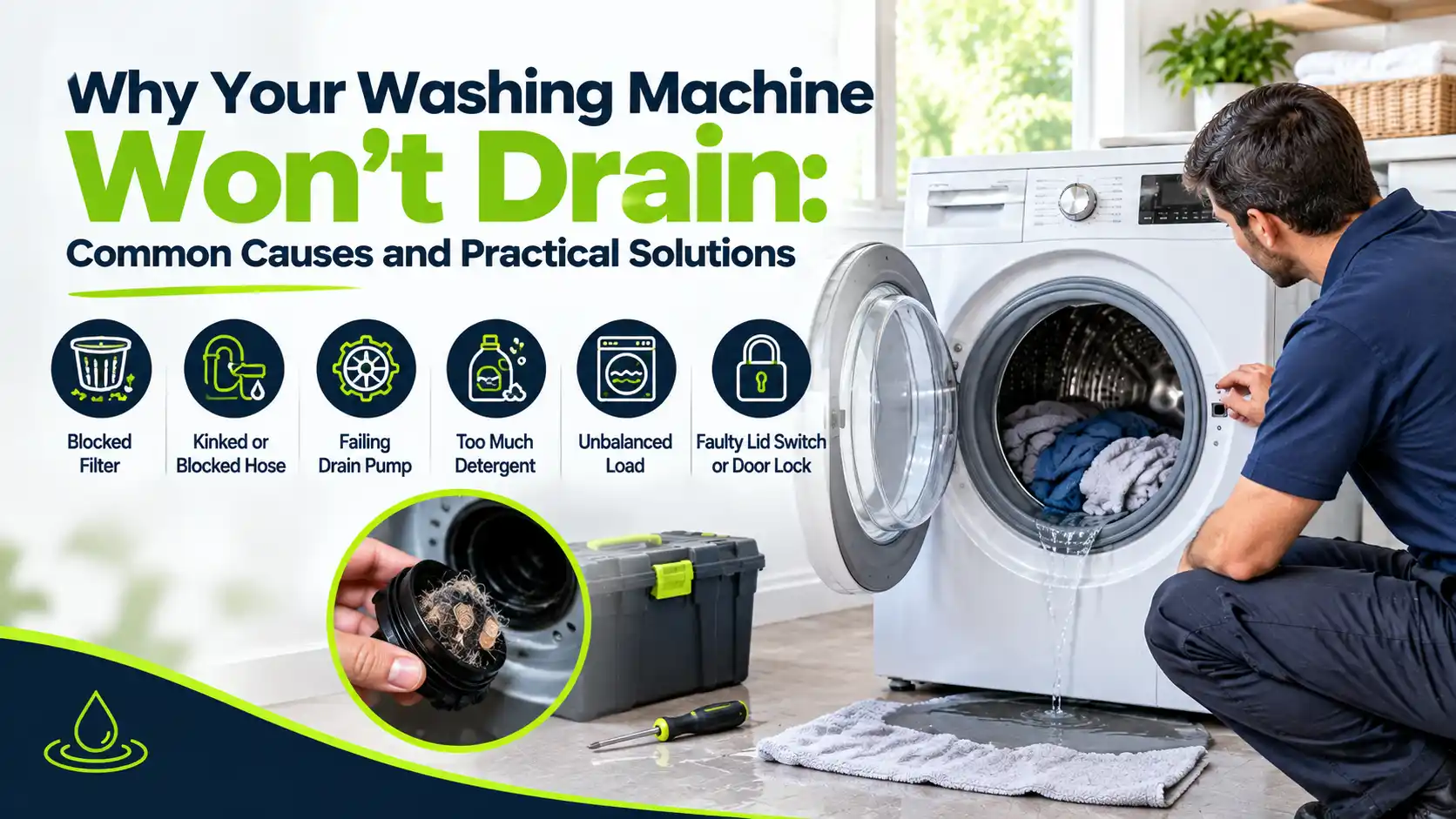
A washing machine that refuses to drain can turn a normal laundry day into a frustrating problem. Water may remain in the drum, clothes may come out soaking wet, or the cycle may stop before the final spin. Understanding the possible causes can help you recognize what needs attention and avoid making the problem worse. If your washer repeatedly leaves water behind or stops mid-cycle, professional washer repair in Sarasota can help identify the fault and determine the appropriate repair.

What Happens When a Washing Machine Cannot Drain?
During a normal wash cycle, the washer pumps used water out through a drain hose before moving on to rinsing or spinning. If water cannot leave the machine, the washer may pause, display an error code, or prevent the spin cycle from starting.
The cause may be something relatively simple, such as a blocked filter or kinked hose. In other cases, a worn drain pump, faulty sensor, or electrical issue may be responsible.
Before attempting any checks, consult the owner’s manual for your model. Always stop the cycle and disconnect power when it is safe to do so. Never reach into standing water while electrical components may be energized.
1. A Blocked Drain Pump Filter
Many front-load washing machines have a drain pump filter designed to catch lint, coins, buttons, and other small objects before they reach the pump. When debris accumulates, water may drain slowly or fail to drain altogether.
Common warning signs include:
- Water remaining in the drum after the cycle.
- A humming sound without effective draining.
- An error code related to drainage.
- Small objects or debris found near the filter.
If your washer has a user-accessible filter, check the manufacturer’s instructions for cleaning it. The access point may release a considerable amount of water, so prepare towels and a shallow container before opening it.
Remove only the debris you can safely reach using the recommended procedure. If the filter is clear but the washer still cannot drain, the problem may lie elsewhere in the drainage system.
2. A Kinked or Blocked Drain Hose
The drain hose carries wastewater from the washer to the household drainage connection. If the hose is bent sharply, crushed behind the appliance, or obstructed, water may struggle to flow out.
Carefully inspect the visible section of the hose for kinks or compression. Make sure the washer has not been pushed too close to the wall and that the hose is installed at the height recommended by the manufacturer.
A blockage inside the hose may not be visible from the outside. Avoid forcing tools into the hose or disconnecting a water-filled line without a plan to contain the spill.
If the hose looks normal but drainage remains slow, a blockage farther along the plumbing system or a problem with the pump may need professional investigation.
3. A Failing Drain Pump
The drain pump is responsible for moving water out of the washing machine. Over time, the pump motor can wear out, or debris can damage or obstruct its impeller.
Possible symptoms include a low humming noise, intermittent draining, water remaining in the drum, or a washer that stops before spinning. A damaged pump may also make grinding or rattling sounds.
Noise alone cannot confirm pump failure. A blocked filter, trapped object, or restricted hose can produce similar symptoms.
If the accessible filter and visible hose are clear but the machine still cannot drain, avoid repeatedly restarting the cycle. A technician can test the pump and determine whether it needs cleaning, clearing, or replacement.
4. Too Much Detergent or Excessive Suds
Using more detergent than necessary can produce excessive suds, particularly when the product is unsuitable for a high-efficiency washer. Some machines respond by extending the cycle, adding rinse steps, or temporarily delaying normal operation.
Follow the detergent manufacturer’s directions and the washer’s recommended dosage. High-efficiency models generally require detergent labeled for HE use.
If you notice thick suds, review the amount and type of detergent you are using. A machine-cleaning cycle may help with residue, but it will not resolve a mechanical blockage or a damaged pump.
Do not add random cleaning chemicals to force the machine to drain. Use only products and procedures approved for your model.
5. An Unbalanced Load or Spin-Cycle Interruption
Sometimes a washer appears to have a drainage problem when the real issue is that it cannot proceed to the spin cycle. Heavy towels, bedding, or a small number of bulky items may collect on one side of the drum and trigger an imbalance response.
If the washer has drained most of the water but the clothes remain very wet, redistribute the load and check whether the machine is level. Follow the manual’s instructions for handling an interrupted cycle.
If water is still standing in the drum, an imbalance may not be the only issue. The machine may be unable to spin because its control system detects a drainage fault.
Repeated imbalance warnings with ordinary loads can also indicate worn suspension components or another mechanical problem.
6. A Faulty Lid Switch or Door Lock
Washing machines have safety mechanisms that prevent certain operations when the lid or door is not securely closed. A faulty lid switch or door-lock assembly can interrupt a cycle, even when the door appears to be shut properly.
Depending on the model, the washer may stop before draining, fail to spin, or display a door-related error.
Check that clothing is not caught in the door and that the latch area is clean. Do not bypass the safety switch or attempt to force the door open while the machine contains water.
If the door locks incorrectly or the washer repeatedly reports that it is open, a qualified technician can test the locking mechanism and associated wiring.
7. A Clogged Household Drain
The washing machine may be working correctly while the household drain connection is obstructed. If water backs up around the standpipe or drains very slowly, the blockage may be in the home’s plumbing rather than inside the appliance.
Look for signs such as water overflowing from the drain opening, unusual gurgling sounds, or drainage problems affecting other nearby fixtures.
Do not continue running the washer if wastewater is backing up. A plumber may be needed to inspect and clear the household drainage system.
If the household drain is clear but water remains in the washer, the appliance’s pump, hose, or internal components should be checked.
8. A Faulty Water-Level Sensor or Control System
Modern washers use sensors and electronic controls to determine how much water is in the drum and when a cycle can proceed. If a sensor sends an incorrect reading, the machine may behave as though water remains inside or stop before completing the cycle.
A control-board problem can produce similar symptoms, but these faults should not be diagnosed from an error code alone.
Write down any code shown on the display and consult the owner’s manual. A technician can use the code and appropriate tests to narrow down the cause.
Avoid opening control panels or handling internal wiring unless you have the required technical training. Electrical diagnosis is best left to a qualified professional.
What You Can Safely Check Before Calling for Help
If your washer will not drain, a few basic checks may help identify an obvious problem:
- Stop the cycle. If the washer is leaking or making a burning smell, discontinue use.
- Check the display. Record any error code before resetting or switching off the machine.
- Inspect the visible drain hose. Look for kinks or crushing without pulling the washer’s connections apart.
- Check the load. If the water has drained but spinning has stopped, redistribute the laundry as directed by the manual.
- Review the filter instructions. Clean a user-accessible drain filter only if your model has one and you can follow the correct water-release procedure.
If these checks do not resolve the issue, repeated attempts to run the washer may waste water or place additional strain on the pump. A proper diagnosis is the next step.
Why Drainage Problems Deserve Prompt Attention
Water left inside a washer can create unpleasant odors, interrupt laundry routines, and make wet clothes difficult to remove. If a leak develops, continued operation can also damage flooring and nearby cabinets.
In Sarasota, laundry rooms may be enclosed or poorly ventilated, allowing moisture to linger. Cleaning up standing water promptly and allowing accessible surfaces to dry can help limit dampness while you arrange repairs.
Do not ignore recurring drainage errors simply because the machine works again after a reset. A partially blocked hose or failing pump may continue to deteriorate until the washer stops draining altogether.
Is It Worth Repairing a Washer That Won’t Drain?
In many cases, yes. A blocked filter, obstructed hose, or faulty drain pump may be repairable without replacing the entire appliance. The best choice depends on the washer’s age, the failed component, parts availability, and the overall repair estimate.
For a relatively new machine in good condition, repairing a single faulty component may be more economical than buying a replacement. If the washer is older and has several major problems, comparing the repair cost with replacement options may make more sense.
Ask for a clear explanation of the diagnosed fault and the expected cost before approving work. This helps you make an informed decision instead of replacing an appliance based only on its symptoms.
When to Arrange Professional Washer Repair
Consider professional assistance if the washer continues to retain water after basic checks, makes unusual pump noises, displays recurring drainage errors, or leaks during operation.
Stop using the appliance if you notice a burning smell, smoke, repeated breaker trips, or a significant leak. Disconnect power only when it is safe to do so, and do not touch electrical components or plugs while standing in water.
For help with other malfunctioning household appliances, Appliance Repair in Sarasota provides information about additional repair services available in the area.
Final Thoughts
A washing machine that will not drain may have a blocked filter, restricted hose, failing pump, or a problem with its sensors or controls. Checking the obvious causes safely can sometimes reveal a simple solution, but persistent symptoms require a more thorough diagnosis.
Avoid repeatedly restarting a washer that remains full of water or shows signs of electrical trouble. Prompt attention can help prevent further damage, protect your laundry area, and restore normal operation with the most appropriate repair.