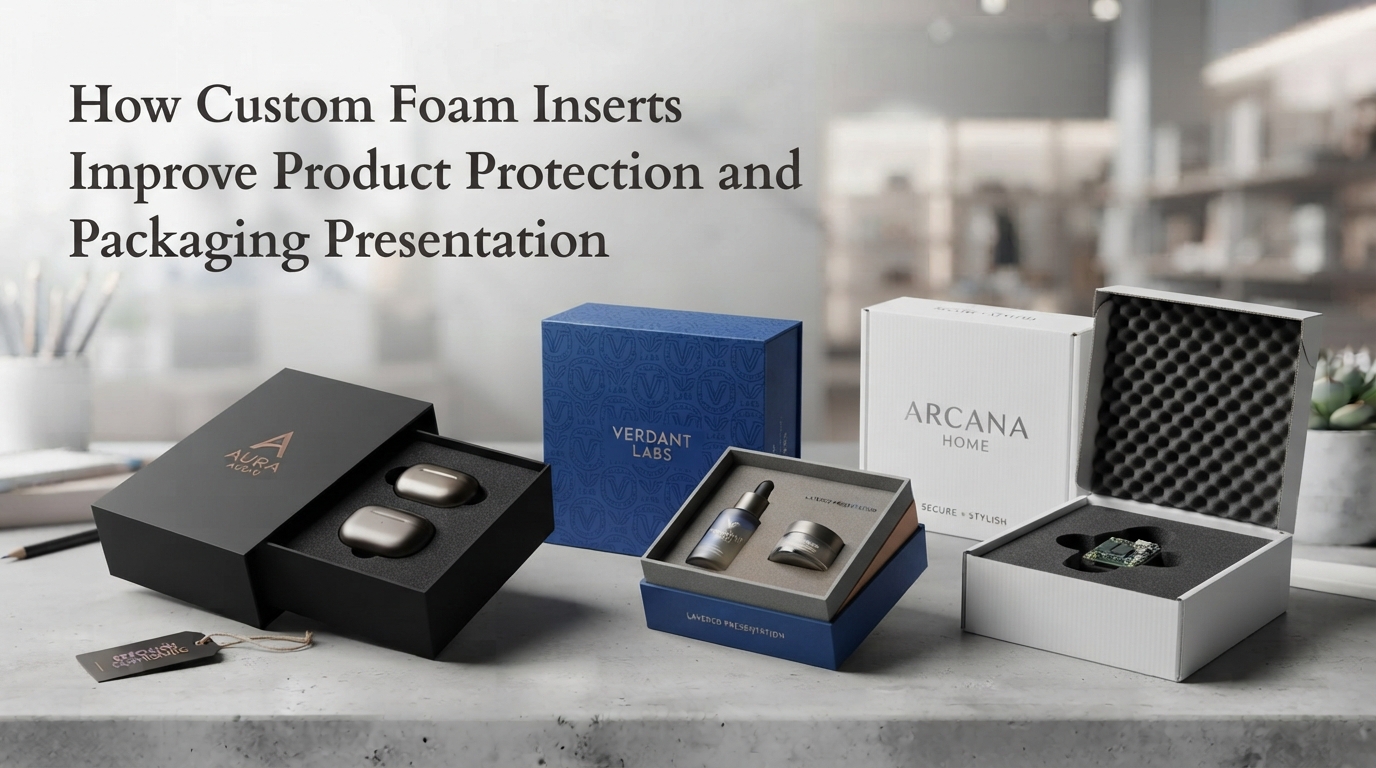
Packaging does more than surround a product. For delicate, valuable, or precisely arranged items, the space inside the box can be just as important as the exterior.

A product may look secure when placed inside a conventional box, yet movement during handling and transportation can lead to scratches, impacts, or unwanted shifting. Custom foam inserts provide a way to create a more controlled interior by forming dedicated spaces around individual products or components.
For brands foam inserts developing packaging around specific products, Branded Packaging Boxes can be combined with thoughtfully designed internal protection to create a complete packaging experience that considers both presentation and functionality.
What Are Custom Foam Inserts?
Custom foam inserts are interior packaging components shaped or configured to accommodate specific products.
Instead of using a generic piece of foam with open space around the item, a custom insert can be developed around the product’s dimensions and shape. This creates a more organized interior and can help limit unnecessary movement.
Foam inserts can be useful for products that need additional cushioning, separation, positioning, or presentation. The appropriate design depends on the product, its fragility, weight, dimensions, and intended distribution environment.
Why Interior Packaging Matters
The exterior of a package may attract attention, but the interior determines how the product is positioned.
During transportation, boxes can be moved, stacked, tilted, or exposed to vibration. If the contents have too much room to move, they may come into contact with the walls of the box or with other components.
A fitted insert can create a dedicated space for the product and help maintain its position.
This is particularly useful when the package contains several pieces. Instead of placing everything together, each component can have its own designated location.
Protection for Delicate Products
Different products require different levels of internal protection.
Electronics, glass items, instruments, luxury accessories, tools, and other fragile products may benefit from an interior designed around their individual shapes.
A foam insert can create cushioning around selected areas while keeping the product centered within the package.
The insert should not simply be chosen based on appearance. Its material, thickness, density, and configuration should be considered according to the actual product and distribution conditions.
Custom Fit vs. Generic Inserts
Generic inserts can be useful for simple packaging applications, but they may leave unnecessary space around products.
A custom-fit interior offers greater control over positioning.
For example, a package containing a device and several accessories could include separate cavities for:
- Main product
- Charging cable
- Adapter
- Instruction material
- Accessories
- Promotional card
Each component can have a defined location, creating a more organized experience when the customer opens the package.
For brands evaluating custom rigid boxes, pairing the outer structure with a fitted interior can create a more complete premium packaging solution.
Foam Inserts for Premium Product Presentation
Protection and presentation can work together.
A precisely arranged foam interior can make the contents appear more deliberate when the package is opened. Instead of discovering products loosely positioned inside a box, customers see an organized presentation.
This can be particularly valuable for premium products where the packaging experience contributes to perceived quality.
A clean arrangement can also make it easier for customers to understand what is included in a product kit or set.
Industries That Can Benefit
Custom foam inserts can be adapted for a wide range of applications.
Electronics
Small electronics and accessories often contain multiple components that need to remain separated during transportation.
A fitted foam interior can provide dedicated spaces for the primary device and supporting accessories.
Jewelry and Luxury Accessories
Valuable products may require a carefully arranged interior that provides both protection and presentation.
Foam can be configured around individual pieces to create a structured display.
Tools and Equipment
Precision tools and equipment may benefit from internal cavities that prevent components from moving around inside the package.
Glass and Fragile Products
Products made from glass or other delicate materials may require additional cushioning and separation.
Promotional Kits
Corporate or promotional packages containing several components can use foam inserts to create an organized presentation while keeping items in their designated positions.
Designing the Insert Around the Product
The first step in creating an effective insert is understanding the product.
Important measurements may include:
- Length
- Width
- Height
- Diameter
- Weight
- Fragile areas
- Protruding components
- Accessories
- Required clearances
The shape of the product should also be considered.
A simple rectangular product may require a straightforward cavity, while an irregularly shaped item may need a more detailed internal profile.
The objective is to create an insert that holds the product appropriately without making removal unnecessarily difficult.
Balancing Protection and Accessibility
An insert should hold the product securely while still allowing the intended user to remove it comfortably.
If the cavity is excessively tight, removing the item can become frustrating. If it is too loose, the product may move unnecessarily.
Finger access points, pull tabs, or other removal considerations can sometimes be incorporated depending on the packaging design.
This is one reason physical sampling can be useful. A digital drawing may show the dimensions correctly, but the physical product-insert interaction can reveal usability issues that are difficult to identify on screen.
Multiple Product Components
Some packaging projects involve more than one item.
A product kit may include a primary product, accessories, documentation, and promotional materials. Without an organized interior, these components can shift during transportation and become difficult to arrange.
A custom insert can divide the interior into clearly defined sections.
For example:
Section 1: Main product
Section 2: Accessories
Section 3: Documentation
Section 4: Promotional materials
This creates a more structured experience and can simplify packing operations.
Combining Foam Inserts With Rigid Packaging
A premium exterior and a well-planned interior can complement each other.
Rigid packaging can provide a sturdy outer structure and a substantial presentation, while the foam insert focuses on internal positioning and protection.
The combination can be useful for products where both appearance and protection matter.
The dimensions of the outer box and insert should be developed together rather than independently. This helps ensure that the interior fits correctly within the finished package.
Branding Opportunities Around the Insert
Although foam is primarily functional, the surrounding packaging can carry the visual identity.
The box exterior and interior surfaces can incorporate:
- Logos
- Brand colors
- Product names
- Artwork
- Instructions
- Collection branding
- Promotional messages
This creates a distinction between the protective insert and the branded presentation surrounding it.
For premium packaging, the contrast between a clean exterior and a precisely organized interior can create a strong opening experience.
Ecommerce and Shipping Considerations
Internal protection becomes particularly important when products are shipped directly to customers.
An ecommerce package may travel through several handling stages before reaching its destination. The product can experience movement and vibration during transportation.
A fitted insert can help maintain the product’s position inside the box, although the complete packaging system should still be evaluated for the expected shipping environment.
Brands should consider:
- Product fragility
- Package dimensions
- Shipping distance
- Handling conditions
- Outer shipping protection
- Internal movement
- Product weight
Testing the complete package under realistic conditions can provide useful information before committing to larger production quantities.
Material Selection
Not every product requires the same type of foam.
The appropriate material depends on factors such as cushioning requirements, product weight, shape, presentation goals, and budget.
Brands should also consider environmental objectives when selecting internal packaging materials. Where sustainability is important, businesses can evaluate alternative insert materials and the overall lifecycle of the packaging system.
The best option is the one that provides an appropriate balance between protection, usability, appearance, and project requirements.
Common Mistakes to Avoid
Designing the Insert Without the Product
An insert should be developed from accurate product dimensions rather than estimated measurements.
Making Cavities Too Tight
A secure fit should not make product removal unnecessarily difficult.
Leaving Too Much Empty Space
Excessive clearance can allow unwanted movement and reduce the effectiveness of the interior.
Ignoring Accessories
If the package includes multiple components, every item should be considered during the interior design stage.
Focusing Only on the Box Exterior
A premium outer box cannot compensate for an interior that allows the product to shift or become damaged.
Skipping Testing
Where protection is critical, the complete packaging system should be evaluated under realistic handling and shipping conditions.
A Simple Planning Process
Brands can follow a straightforward process when developing a custom foam interior.
1. Identify the product.
Document its dimensions, weight, shape, and fragile areas.
2. List all components.
Include accessories, documentation, cables, tools, or other items that will share the package.
3. Define the protection requirement.
Determine which areas require cushioning, separation, or additional support.
4. Plan the cavity layout.
Arrange each product and component in a logical position.
5. Consider accessibility.
Make sure users can remove the contents without unnecessary difficulty.
6. Coordinate with the outer box.
Ensure the insert dimensions work with the final packaging structure.
7. Review a physical sample.
Test the actual product inside the insert before larger production.
This process can help identify fit and usability problems early.
Frequently Asked Questions
1. What are custom foam inserts used for?
They are used to hold, separate, cushion, and organize products or components inside packaging. They are particularly useful for fragile, valuable, or precisely arranged products.
2. Can foam inserts be customized to a product’s shape?
Yes. A custom insert can be designed around the dimensions and shape of the product, including irregular profiles and multiple components.
3. Can foam inserts be used with rigid boxes?
Yes. Foam inserts can be paired with rigid packaging to create a structured exterior and a fitted protective interior.
4. Are foam inserts suitable for ecommerce packaging?
They can be useful for ecommerce products that require internal positioning or cushioning. The complete package should be evaluated according to the expected shipping conditions.
5. Can a custom foam insert hold multiple products?
Yes. An insert can be designed with separate cavities or sections for multiple products, accessories, and other components.
Conclusion
The interior of a package deserves the same level of planning as its exterior. Custom foam inserts can help brands create a more secure, organized, and professional environment for products during handling, storage, and delivery.
The most effective insert begins with the actual product. Dimensions, weight, shape, fragility, accessories, removal requirements, and shipping conditions all influence the final design.
When combined with a well-designed outer package, a fitted foam interior can provide both functional protection and a more polished unboxing experience. For brands handling delicate or premium products, that combination can make packaging more purposeful from the inside out.