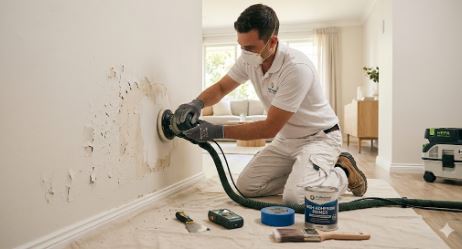
Aesthetic flaws on the wall of a building are usually not a minor issue. Far more often than not, they are indications of more fundamental issues with the substrate, structural changes, or environmental stress. For a property owner, the first instinct is to paint when he or she sees peeling, cracking, or discoloration. But, this cosmetic solution will not work unless the underlying causes are addressed.
The best thing about implementing long-term durability is a strategy. It requires knowledge of the interaction of architectural coatings with various building materials over different environmental exposures. This complete resource covers the fundamentals of paint deterioration and explains how a quality professional painting contractor can perform advanced diagnostics and elite remediation techniques to restore integrity to the substrate and provide a perfect finish.
The Hidden Costs of Substrate Neglect
As coatings deteriorate, their first effect is that they look bad. But the real threat is under the ocean. Once the degradation of the topcoat is ignored, it can lead to a domino effect that not only compromises the beauty of the structure but also negatively impacts its market value. Paint has more than a decorative purpose; it is the most important barrier to the underlying substrate from moisture and exposure to ultraviolet radiation and mechanical damage.
After this line of defense is compromised, moisture can easily infiltrate raw drywall, plaster or masonry. This exposure causes substrate rot, mould and reduces the building envelop. Whether used in a commercial facility or a home, failing to take care of these problems will cost more and more to repair and result in a lessening of the value of the property.
The professional painting contractor tackles these challenges looking at the architecture in the diagnostic mode. As opposed to just masking up a damaged area, an expert will take into consideration the property’s microclimate and pinpoint the exact type of paint failure before implementing early intervention strategy. This systematic process will prevent the degradation of the topcoat, while ensuring the structural integrity of the property is maintained and its market value is retained.
Why Paint Coatings Fail and How to Fix Them
The first step in solving the problems of architectural surface damage by paint is to understand why paints are failing. When paint fails, it is usually because of chemical, mechanical or environmental conflicts.
Hydrostatic Pressure and Moisture Entrapment
The biggest adversary of a good paint finish is moisture. When water seeps into the material from a leak on an outside roof surface, plumbing micro leak, or rising groundwater, the water spreads out towards the dry air. This water is trying to dry out and sends HUGE hydrostatic pressure behind the paint film. If the coated surface does not possess enough vapor permeability, i.e., its ability to allow microscopic moisture vapor to penetrate through it, but not liquid water, the trapped moisture will cause the paint to peel off from the wall. High relative humidity and poor indoor ventilation exacerbates this problem, as it inhibits the coating from maintaining a dry, stable bond with the substrate.
Inadequate Substrate Preparation and Contamination
A top quality paint product can only be as good as the surface it’s applied to. The inability to stick is often attributed to a lack of a proper wall surface preparation process or an overly rushed one. Over time, various residues of drywall dust, efflorescence, grease, oil and mill glaze build up on the substrates, including new timber. When a contractor puts a coating on top of these contaminants the paint will adhere to the dust or grease and not the actual structural wall. As the paint dries and with normal thermal stresses over time, it easily separates from the surface resulting in the general flaking and peeling of paint.
Material Incompatibility and Application Anomalies
The science of coating chemistry is very specialized today. If painted over a highly elastic substrate, the paint layer will inevitably create conflict at the onset of the application. Likewise, a chemical incompatibility is a problem when an oil-based topcoat is applied over an unprimed latex paint, due to the difference in chemical structure of the two paint types. In addition, any anomalies in the application, such as thinning the material too heavily, not following the wet film thickness guidelines or painting at times of volatile thermal expansion will destroy the curing process of any coating, no matter how costly it is.
Structural Anomalies a Professional Contractor Can Resolve
A painting contractor with the experience of working on these projects knows the best method to diagnose and resolve numerous structural issues as they come across.
Paint Delamination: Peeling and Flaking
Delamination is the complete loss of the cohesive forces among paint film particles and/or adhesive forces between the paint film and the wall. This leads to a major peeling and flaking problem with large sections of paint leaving bare substrate. This is a particular problem in exposed areas that are subject to high levels of moisture such as bathrooms, window sills, and coastal exteriors. The solution is to carefully define the failure zone, stripping away all affected layers and making sure that the underlying drywall or wood is not damaged.
Tensile Stress Fractures: Cracking and Alligatoring
Buildings settle, expand and contract as they age. The ongoing motion places a tremendous amount of stress on the rigid paint systems. If the coating is not sufficiently strong, stress fractures occur. This first starts as fine checking then progresses into alligatoring, a more serious cracking that looks like the skin of an alligator. When a fast drying coat is finished over a slow drying undercoat. If the surface is chipped or alligatored on older buildings, safety precautions must be taken in order to stop the toxic dust from spreading before any scraping or mechanical disturbance is initiated, such as lead-safe containment.
Osmotic Blistering: Paint Bubbling
The appearance of osmotic blisters is the result of small to medium blisters of fluid or gas under the paint film. This is because the coating is subjected to very high temperatures shortly after application (referred to as solvent blistering) or because water is attracted to water-soluble salts that are held in the subcoating system. A professional contractor won’t just pop the paint bubbles and paint them over—in order to provide long-lasting paint blistering solutions. They employ electronic testing equipment to locate the source of the moisture, neutralize the salts and make sure the entire wall is stabilized before applying a paint drop.
Chromatic Degradation: Stains and Chalking
Chromatic deterioration can have a dramatic effect on the visual appearance of a property due to environmental exposure. When exposed to UV, the binders in poor quality or improperly formulated paint decompose producing a powdery white residue called chalking. At the same time, problems such as leaching from the surfactant, persistent stains from water, smoke soot and tannin bleed-through from the underlying wood can mar the appearance of a wall. To remove the stain, use of advanced blocking agents and chemical neutralizers is strategically applied to permanently isolate the stain from the fresh topcoat.
Advanced Diagnostics and Substrate Assessment
An elite professional painting contractor will first perform a comprehensive and scientific assessment of the property with cutting-edge architectural forensics testing to determine the environment before picking up a brush or scraper.
To measure the precise relative humidity in wood, concrete and drywall, contractors use pinless and pin-type moisture meters that ensure there is no moisture to cause future blisters. They also employ cross-hatch adhesion testers to slice a lattice into the old film, and use a special tape to test exactly how the film is sticking to the wall. Finally, dry film thickness gauges are used to accurately determine the thickness of cured paint layers, so that the wall is not over coated with too many old historical layers of paint that might peel in the future.
The secret to knowing when you’re dealing with an interior humidity issue vs. an exterior building envelope problem is to identify the difference between the two. A professional painting contractor with experience thoroughly examines roof drainage pathways, structural caulking seams and exterior flashing paths. The technician will create an authoritative diagnostics report which ensures that all mechanical and structural leaks are fully addressed prior to the painting process.
Elite Methods for Remediation and Restoration
After the diagnostics are finished, the contractor moves on to the remediation and restoration process and implements highly specific field techniques to ensure durability of the surface over time.
The first step in the restoration is mechanical abrasion, which is very thorough. Specialized scraping tools are used to strip all loose, flaking and failing paint. Elite contractors use high-efficiency, HEPA-filtered dustless sanding systems to prevent harmful dust from entering the air, helping to keep the air inside the facility clean and healthy while also preserving the property. The sharp, jagged edges from the coating areas that were not damaged are carefully feather-edged after the coatings that have failed are removed. This precision sanding will seamlessly blend the old paint with the bare substrate to create a completely flush, level surface transition between old paint and new topcoat, eliminating ghost lines from showing through.
When the substrate is exposed, it needs to be structurally stabilized. High performance elastomeric compounds or special fibre reinforced skim coatings are used to repair deep micro-cracks, gouges and masonry voids which move with the building. For concrete or masonry surfaces, the contractor will apply a mild acid etching solution, rinse and then allow sufficient drying time to remove harmful surface alkalinity.
A good topcoat needs a good primer and a good primer is the link between a raw substrate and a beautiful topcoat. Alkyd-based stain blockers are used by a professional painting contractor to isolate severe water stains, and masonry conditioners to stabilize porous surfaces. After curing of the primer, the final high quality architectural finish is applied. Application variables are carefully monitored to ensure an even thickness is applied completely, using airless spray equipment for perfect coverage, or professional rolling and back-brushing techniques for mechanical pressure and dense coverage in porous profiles for optimum adhesion.
Conclusion
Owners and top-tier companies aren’t just in the final finish, there’s much more to it. A professional painting contractor works to help you develop a proactive building lifecycle management plan to protect your investment.
The longevity of the coating relies greatly on the regular maintenance. If a superior paint job is installed, then an annual building envelope maintenance plan can increase the life of this paint by years. This approach involves regular and low intensity washdowns to flush out atmospheric salts, industrial pollutants and organic spores before they can break the chemical bonds of the film layers. Also, regular checks of joint sealants, window perimeter and caulking routes will help you find and seal minor cracks before water can get in and damage surrounding paint.
In addition to the application technique, the selection of an appropriate product to the environment is essential in order to prevent the failure of paintwork. If a space is humid and requires moisture, the contractor will recommend the appropriate paints that are designed to resist mold. For high traffic commercial hallways, they will choose crosslinked acrylics that are highly scratch resistant.
FAQS
Why does paint peel even after multiple coats are applied?
Peeling paint is generally a result of the lack of adhesion at the base coat, usually because dust, moisture or lack of a base coat has been painted over. The more coats, the more the problem is exacerbated. The extra paint adds weight and tensile stress which separates the failing base layer from the substrate, creating very severe cohesive failure.
What is the maximum safe moisture level for painting walls?
Wood substrates should not be painted when the moisture content is above 15%, as this is considered to be industry standard. In the case of concrete, brick, and traditional dry wall, the moisture content should be kept at less than 12%. When painted on a surface greater than these levels, paint will keep water inside the surface causing a rise in vapor pressure and inevitable blistering.
Is it possible to patch-repair peeling paint, or should a professional painting contractor strip the entire wall?
If the peeling is limited to a particular localized problem (e.g., localized water splash or minor scratch), localized remediation is very effective. If an adhesion test performed by a professional painting contractor indicates that the paint is failing in many spots on many layers, however, the patching will only be short-term. In those systemic scenarios, the whole surface must be stripped back to a stable substrate to obtain a long lasting and reliable surface finish.

Leave a Reply