Radon is a naturally occurring radioactive gas that can enter Radon Mitigation Calgary homes, offices, and other buildings from the soil beneath and around a property. It is colorless, odorless, and tasteless, which means it cannot be detected without proper testing. Although radon exists naturally in the environment, elevated indoor concentrations can become a concern when the gas accumulates in enclosed spaces.

For property owners, understanding how radon enters a building, how testing works, and what can be done to reduce elevated levels is an important part of maintaining a healthy indoor environment. Professional assessment and a properly designed mitigation system can provide a practical approach for controlling radon inside residential and commercial properties.
Why radon mitigation calgary Matters for Property Owners
Calgary properties can have different foundation types, soil conditions, construction methods, and ventilation characteristics. These factors can influence how radon enters a building and how much of the gas may accumulate indoors. A mitigation solution therefore needs to be appropriate for the specific structure rather than following a generic installation method.
Radon can enter through very small openings that connect the building with the surrounding soil. Once inside, the gas can accumulate in lower levels of a property, particularly when natural ventilation is limited.
Homeowners may want to consider professional radon assessment when:
- Purchasing an older or newly constructed property
- Renovating a basement
- Spending significant time in below-grade rooms
- Moving into a property without previous radon testing
- Receiving elevated results from a radon test
- Planning improvements to indoor air quality
Understanding the property’s radon level is the first step toward determining whether further action is necessary.
What Is Radon?
Radon is produced naturally when uranium present in soil, rock, and other geological materials breaks down. As a gas, radon can move through soil and enter buildings through openings in foundations and floors.
Unlike visible indoor air contaminants, radon does not provide an obvious warning. There is no smell or colour that can alert occupants to its presence. This is why testing plays such an important role in identifying elevated indoor concentrations.
Radon may enter through:
- Foundation cracks
- Construction joints
- Floor drains
- Sump pits
- Gaps surrounding pipes
- Utility penetrations
- Crawl spaces
- Cracks in concrete floors
- Openings around plumbing and wiring
Sealing some openings can help reduce pathways, but sealing alone is not always an adequate solution when indoor radon levels are elevated.
Why Radon Testing Should Come First
Before deciding on mitigation, property owners should understand the property’s existing radon concentration. Testing provides measurable information that can be used to determine whether additional action is appropriate.
Testing may involve short-term or long-term measurement depending on the purpose and circumstances. A professional can help determine which approach is suitable and explain how the results should be interpreted.
A property assessment may also examine:
- Foundation construction
- Basement and crawl-space conditions
- Existing ventilation
- Potential soil-gas entry points
- Previous test results
- Building renovations or modifications
Testing after mitigation can also be useful for confirming whether the system has achieved the intended reduction.
How Radon Enters a Building
The pressure inside a building can sometimes be lower than the pressure in the surrounding soil. This difference can encourage soil gas to move through cracks and openings toward the interior.
Heating, ventilation, weather conditions, and building design can influence air movement and pressure differences. Because every building behaves differently, identifying likely entry pathways is an important part of developing an effective solution.
Basements and other below-grade spaces often deserve particular attention because they have greater contact with the surrounding soil.
How a Radon Mitigation System Works
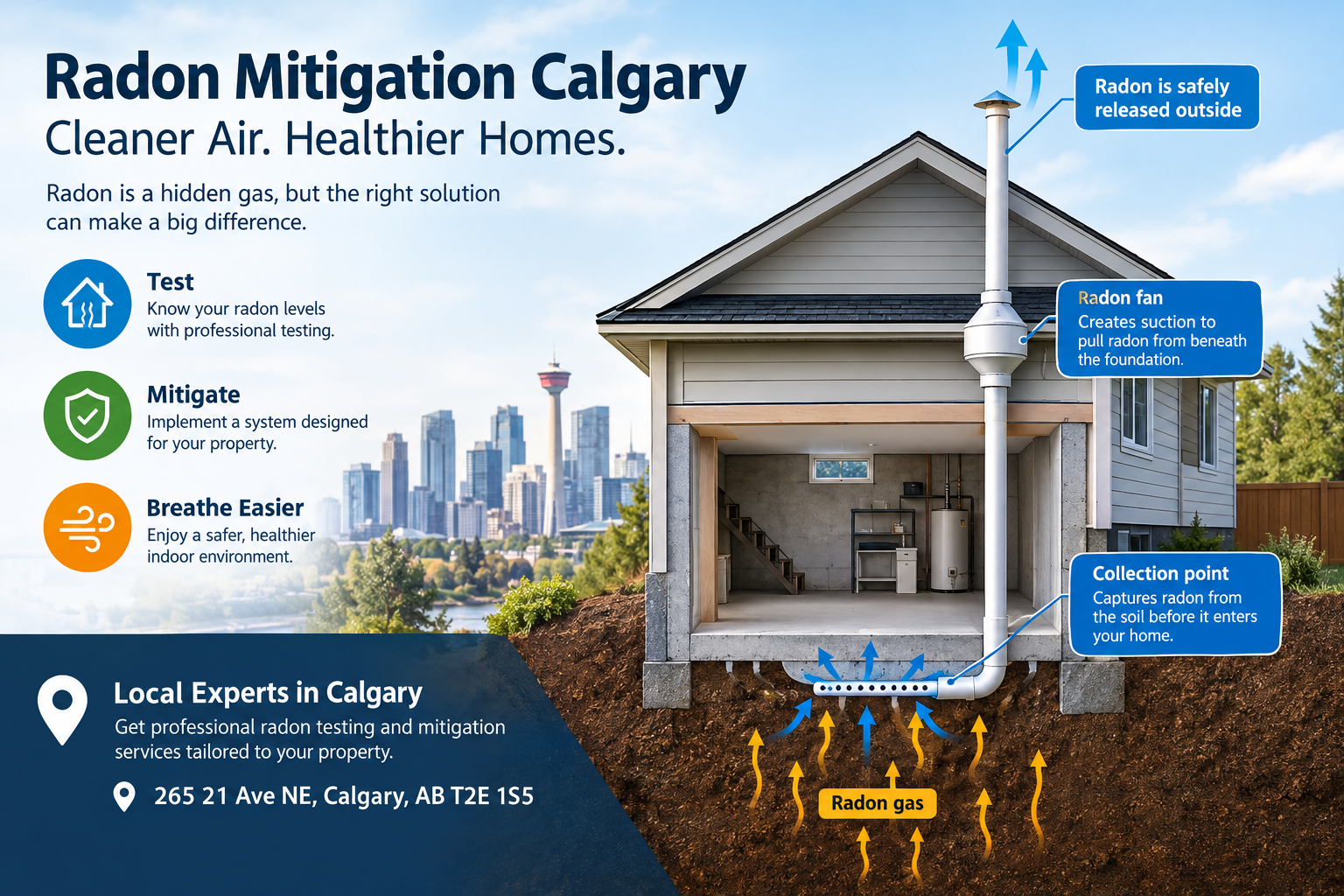
A mitigation system is designed to intercept soil gas before it can accumulate inside occupied areas and safely direct it outside.
One commonly used approach is active soil depressurization. A collection point is created beneath or through the foundation, allowing soil gas to be drawn into a pipe. A fan creates suction and moves the collected gas through the vent system before it is discharged outdoors.
A typical system may contain:
- A soil-gas collection point
- Vent piping
- A radon fan
- Sealed openings around the collection area
- An exterior discharge point
- System monitoring or warning components
The design and placement of these components depend on the building’s construction, foundation, soil conditions, and existing layout.
Factors That Influence Mitigation Design
There is no universal system that works identically for every property. A professional assessment can help determine the most appropriate design.
Foundation Type
A poured-concrete basement may require a different approach from a crawl space or slab-on-grade structure. Combination foundations can require multiple considerations.
Soil Conditions
Soil permeability affects how easily soil gas moves beneath a building. This can influence the location and design of the collection system.
Building Layout
Mechanical rooms, finished basements, utility areas, and existing pipes can affect where mitigation equipment can be installed and how vent piping should be routed.
Existing Ventilation
Ventilation characteristics may influence indoor air movement and should be considered as part of the overall assessment.
Property Age
Older properties can have unique foundation details, repairs, cracks, or openings that need to be evaluated before installation.
What Professional Radon Work Should Include
A professional approach should involve more than simply placing a fan on a pipe. The system needs to be designed around the conditions of the property.
Depending on the project, the process may include:
- Reviewing existing radon test results
- Inspecting the foundation
- Identifying potential entry pathways
- Evaluating the property’s construction
- Selecting an appropriate collection point
- Planning the vent-pipe route
- Installing the fan and associated components
- Sealing relevant openings where appropriate
- Checking system operation
- Recommending post-installation testing
A well-planned installation should also consider the appearance, accessibility, noise, and long-term operation of the equipment.
Common Mistakes Property Owners Should Avoid
When dealing with radon, choosing the cheapest or quickest solution is not always the best approach. An improperly designed system may not perform as expected.
Some common mistakes include:
- Installing equipment without first testing
- Assuming every property needs the same system
- Relying only on sealing cracks
- Ignoring crawl spaces or other lower areas
- Failing to perform follow-up testing
- Not checking the system after installation
- Choosing equipment without considering the property’s structure
Professional guidance can help property owners avoid these issues and make decisions based on actual building conditions.
Benefits of Addressing Elevated Radon
Taking action when elevated radon is identified can provide homeowners with greater confidence in their indoor environment. A properly designed system can provide an ongoing method for controlling radon entry and reducing indoor concentrations.
Potential benefits include:
- Reduced indoor radon exposure
- Greater confidence in indoor air quality
- A long-term approach to radon control
- Professional evaluation of potential entry points
- Better understanding of the property’s soil-gas conditions
- A system designed around the building’s structure
For many property owners, the biggest benefit is having a clear plan rather than relying on assumptions about indoor radon.
How to Choose a Radon Professional
Choosing the right provider is an important part of the process. Property owners should consider experience, assessment methods, system design, installation quality, and communication.
Before hiring a provider, consider asking:
- Do you provide or work with professional radon testing?
- How will you determine the appropriate mitigation approach?
- What type of system is recommended for the property?
- Where will the vent piping and fan be located?
- How will system performance be checked?
- Is follow-up testing recommended?
- What maintenance will the system require?
A reputable professional should be willing to explain the proposed solution in clear language instead of making unrealistic promises.
Understanding Radon Mitigation Services
Radon mitigation services can involve several stages of managing elevated radon, including reviewing test results, assessing the building, designing an appropriate system, installing equipment, and checking the system after completion.
The exact service required depends on the property’s structure and testing results. Some buildings may need a relatively straightforward installation, while others may require a more detailed assessment because of multiple foundation types, crawl spaces, finished basements, or unusual construction.
Ongoing attention is also important. Fans and other components can require maintenance, while periodic testing can help property owners confirm that radon levels remain controlled.
Final Verdict
Managing radon starts with information. Since the gas cannot be seen, smelled, or tasted, testing is the most practical way to understand what is happening inside a property. If elevated levels are identified, a professionally designed mitigation system can provide a structured and effective approach to reducing indoor concentrations.
Property owners should focus on proper assessment, suitable system design, quality installation, and follow-up testing rather than relying on quick fixes. With the right approach, homeowners and businesses can take meaningful steps toward maintaining a safer and more comfortable indoor environment.
For professional assistance with radon remediation calgary, property owners can discuss their testing results, building conditions, and mitigation requirements with an experienced local provider.
For local assistance, visit Radon Calgary at 265 21 Ave NE, Calgary, AB T2E 1S5, where property owners can learn more about testing, mitigation, and practical solutions for managing radon.