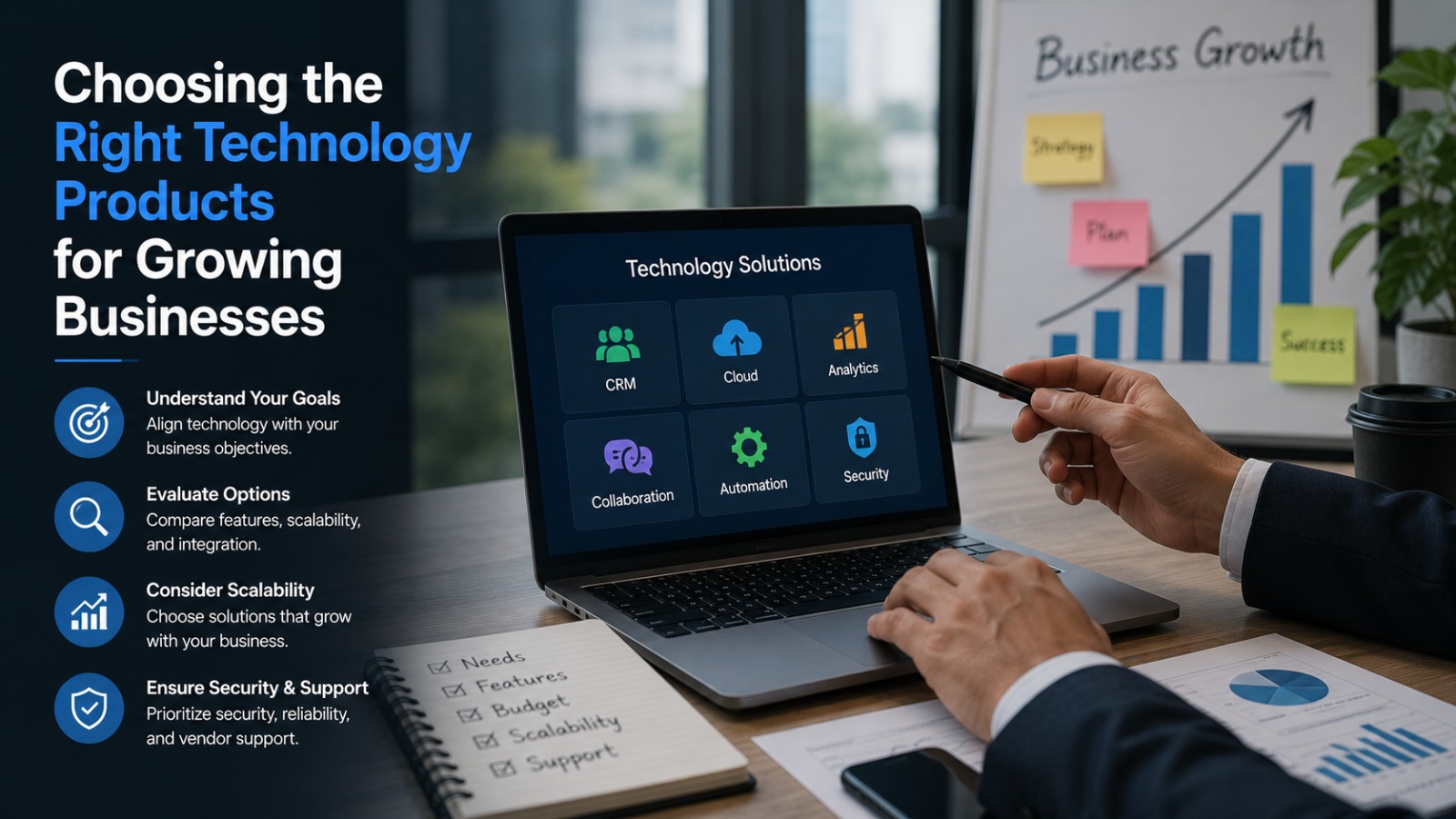
A growing business buys a batch of laptops on sale, picks up networking equipment from whoever had the fastest delivery, and adds a handful of software licenses without much thought about how any of it will fit together six months down the line. It works fine at first. Then the business doubles in size, none of the hardware talks to the new systems properly, half the equipment is already outdated, and the company is left patching together a mess instead of scaling smoothly. This is a far more common story than most growing businesses expect, and it’s exactly why serious IT Product Trading has become such an important part of how companies actually plan their technology purchases instead of buying reactively.

Choosing the right technology products isn’t just a procurement task. It’s a decision that shapes how efficiently a business can operate and how easily it can grow without hitting constant technical walls.
Why This Decision Matters More Than Businesses Realize
Technology purchases tend to get treated as a checklist item buy the laptops, order the servers, pick a software plan, move on. But every one of these choices has downstream effects. Equipment that isn’t scalable becomes a bottleneck the moment the business grows past its original capacity. Products from unreliable suppliers create ongoing headaches around support, replacement parts, and warranty claims. Mismatched systems that don’t integrate well with each other create the kind of manual workarounds that quietly drain productivity for years.
Businesses that treat technology purchasing as a strategic decision, rather than a reactive one, tend to avoid a huge amount of the operational pain that catches up with less deliberate competitors later.
Key Factors Growing Businesses Should Actually Consider
1. Scalability Over Short-Term Savings
The cheapest option today isn’t always the cheapest option over time. Products that can’t scale with the business often get replaced within a year or two, meaning the business ends up paying twice once for the initial purchase, and again for the premature replacement. Choosing products designed to grow alongside the business, even at a slightly higher upfront cost, usually saves significantly more money over a longer horizon.
2. Compatibility With Existing Systems
New technology purchases need to work with what’s already in place, not create isolated islands that require manual bridging. Before buying anything, businesses should clearly understand how a new product will integrate with existing hardware, software, and workflows, rather than discovering compatibility issues after the purchase is already made.
3. Reliability of the Supplier, Not Just the Product
A great product from an unreliable supplier can still turn into a nightmare. Delayed replacement parts, poor warranty support, and inconsistent stock availability all create operational risk that has nothing to do with the quality of the product itself. Working with an established IT Products Supplier in Qatar gives growing businesses more confidence in consistent availability, genuine warranty support, and a reliable point of contact when something inevitably needs troubleshooting or replacement down the line.
4. Total Cost of Ownership, Not Just Purchase Price
The sticker price of any technology product is only part of the real cost. Maintenance requirements, energy consumption, support contracts, and expected lifespan all factor into what a product actually costs over its useful life. Businesses that only compare purchase prices often end up spending more overall on products that seemed like the cheaper choice initially.
5. Security Standards Built In From the Start
Technology products that don’t meet solid security standards create vulnerabilities that can be expensive and damaging down the line. This applies to everything from networking equipment to endpoint devices to software platforms. Security shouldn’t be an afterthought added after a purchase it needs to be part of the evaluation criteria from the beginning.
6. Vendor Support and Long-Term Relationship
Technology inevitably needs troubleshooting, updates, and occasional replacement. Working with vendors who offer genuine ongoing support, rather than disappearing after the sale is complete, makes a meaningful difference when something goes wrong at an inconvenient moment, which it eventually will.
Common Mistakes Growing Businesses Make
A few patterns show up repeatedly in businesses that struggle with their technology decisions. Buying based purely on price without considering long-term costs is one of the most common, often leading to premature replacements and hidden maintenance expenses. Ignoring scalability is another purchasing exactly what’s needed today without any room for growth, which forces a costly overhaul the moment the business expands. Working with too many disconnected vendors also creates unnecessary complexity, making support and troubleshooting far more difficult than it needs to be. And skipping proper research into supplier reliability tends to cause the most frustration, since a great product means little if it can’t be reliably supported or replenished when needed.
Building a Smarter Technology Purchasing Strategy
Businesses that get this right tend to follow a similar approach. They start by mapping out both current needs and realistic growth projections, rather than only planning for where the business stands today. They prioritize products and vendors known for reliability and genuine support over the lowest possible price. They favor systems designed to integrate cleanly with what’s already in place, avoiding the fragmented setups that create ongoing friction. And they build relationships with a smaller number of trusted suppliers rather than scattering purchases across dozens of unfamiliar vendors, which makes support, warranty claims, and future purchasing decisions considerably easier to manage.
This kind of deliberate approach takes more upfront thought than simply buying whatever’s convenient in the moment, but it pays off considerably as the business scales and its technology needs become more complex.
Why This Becomes More Critical as Businesses Grow
Small missteps in technology purchasing are usually manageable for a small business a single mismatched printer or an underpowered laptop doesn’t sink the ship. But as a business scales, the same mistakes multiply. Mismatched systems create bigger integration headaches. Unreliable suppliers cause bigger disruptions when equipment across an entire office or department needs replacing at once. What was a minor inconvenience at ten employees becomes a serious operational risk at a hundred.
This is exactly why growing businesses benefit from treating technology procurement as a genuine strategic function, not an administrative afterthought handled by whoever has a few spare hours between other responsibilities.
Final Thoughts
Choosing the right technology products isn’t about chasing the newest or cheapest option available. It’s about making deliberate decisions that account for scalability, compatibility, supplier reliability, and long-term cost the factors that actually determine whether technology helps a business grow smoothly or becomes another obstacle standing in its way.
The businesses that get real value out of their technology investments aren’t necessarily spending the most. They’re the ones making informed, strategic choices instead of reactive ones, building a foundation that can actually keep pace with where the business is headed.



One thought on “Choosing the Right Technology Products for Growing Businesses”