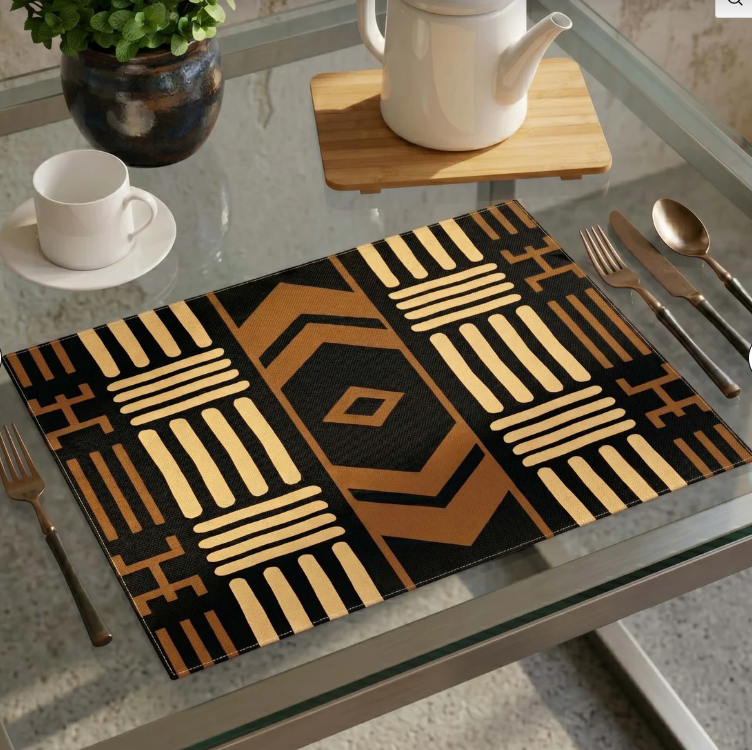
It’s easy to overlook placemats when thinking about dining room style, most of the visual attention tends to go toward the table itself, the centerpiece, or the dinnerware. But placemats sit directly under every plate at every meal, which makes them one of the most consistently visible details in the room. A set of African placemats takes advantage of that, turning an otherwise overlooked accessory into one of the easiest ways to add color and pattern to everyday dining.
Why Pattern Works So Well at the Table
Placemats are typically viewed up close and from above, which is a different vantage point than most other home decor. Patterns that might feel busy on a large wall or piece of furniture often read as rich and detailed rather than overwhelming when scaled down to placemat size and viewed at table height. African print placemats, often built around geometric mudcloth-style patterns or vibrant wax-print color blocking, take advantage of this. The smaller surface area means even a fairly bold print stays proportionate and doesn’t compete with the rest of the table setting.
Everyday Use vs. Entertaining
One of the practical advantages of placemats over a full tablecloth is flexibility. For everyday meals, a set of patterned placemats adds personality to the table without requiring much extra care or laundering, since they’re easier to spot-clean and quicker to wash than a full-sized cloth. For entertaining, a coordinated set of African print placemats can anchor an entire table setting, paired with simpler white or neutral dinnerware so the pattern in the placemat has room to stand out rather than competing with patterned plates or bowls.
Mixing Patterns and Solids
A common approach with patterned placemats is to alternate them with solid-colored ones around the table, rather than using the same pattern for every single seat. This keeps a long table from feeling overly repetitive while still tying the whole setting together visually. Another option is layering: placing a patterned placemat on top of a simple charger plate or a contrasting solid placemat underneath, which adds visual depth and works particularly well for more formal table settings or holiday gatherings.
Pairing With a Table Runner
Placemats and a table runner don’t have to match exactly, but they generally look most cohesive when they share at least one element, whether that’s color palette, pattern style, or general visual weight. A runner in a similar mudcloth-inspired pattern with placemats in a complementary solid color (or vice versa) tends to look more intentional than two competing busy patterns layered directly on top of each other. For anyone newer to mixing pattern at the table, starting with one statement piece, either the runner or the placemats, and keeping the other simpler is usually the easiest way to get a polished result without much trial and error.
Choosing Material and Quality
Placemats see a lot of wear, spills, hot dishes, and frequent washing, so material matters more than it might initially seem. Tightly woven cotton or cotton-blend placemats tend to hold color and pattern well over repeated washes while still being absorbent enough to handle the occasional spill. Heavier woven or slightly textured placemats also tend to sit flatter on the table and resist curling at the edges compared to thinner, more lightweight fabric options. For anyone planning to use placemats for both everyday meals and entertaining, it’s worth choosing a fabric that can handle a washing machine cycle without significant fading, since these tend to get used (and washed) far more often than most other table linens.
Caring for Printed Placemats
Most cotton-based placemats can be machine washed in cold water, which helps prevent the color from fading prematurely. Avoiding bleach or harsh stain removers on patterned pieces is important, since these can lighten or distort the printed design even in spots that weren’t directly stained. Ironing on a low to medium setting, or simply smoothing them by hand while still slightly damp, helps placemats lay flat at the table rather than looking wrinkled once set out. For everyday use, having two or three sets in rotation makes it easy to keep one in the wash while still having a clean set ready for the next meal.
Bringing It All Together
A great table doesn’t require an expensive overhaul to feel more considered. Something as simple as swapping plain placemats for a set of well-made African print ones is one of the lowest-effort, most visible upgrades a dining table can get, whether it’s set for a quiet weeknight dinner or a table full of guests. It’s a small detail, but it’s one that gets noticed at literally every meal.

Leave a Reply